 The bimonthly news publication for aviation professionals.
 Read this story in our October 2024 printed issue.
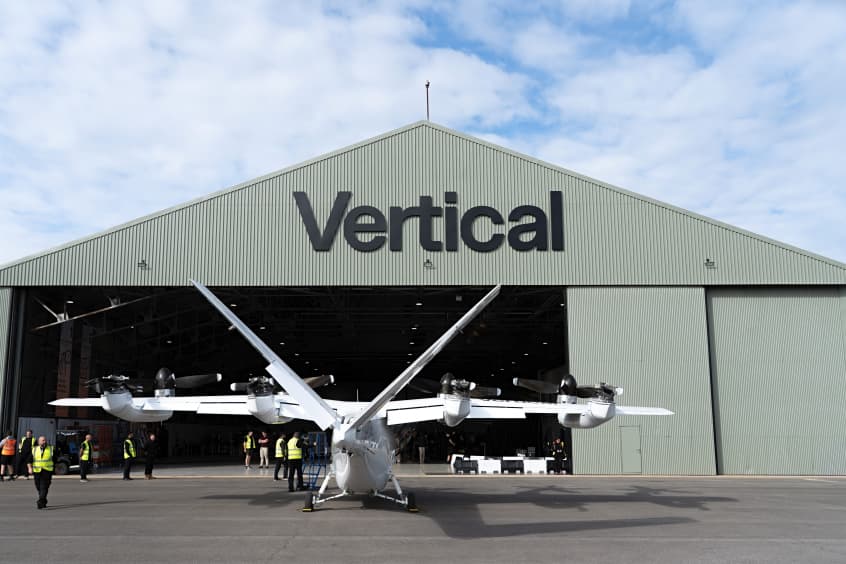
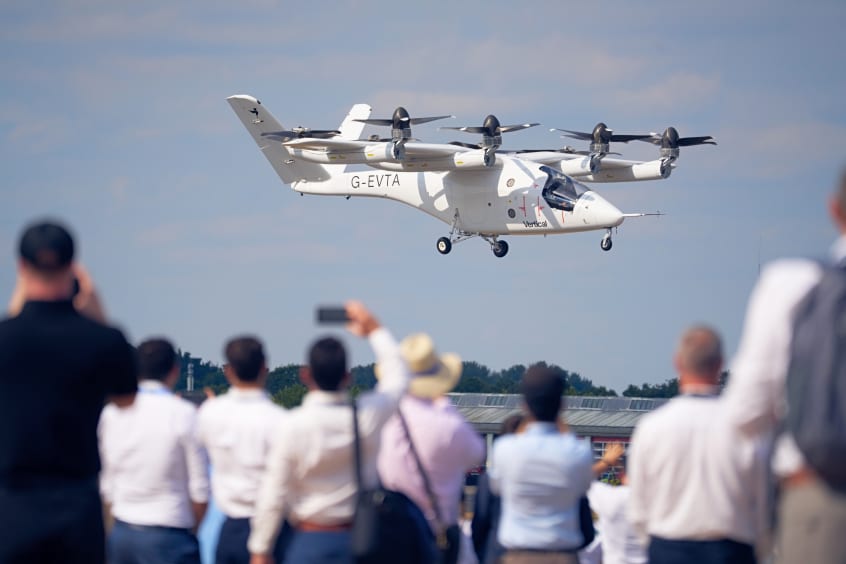
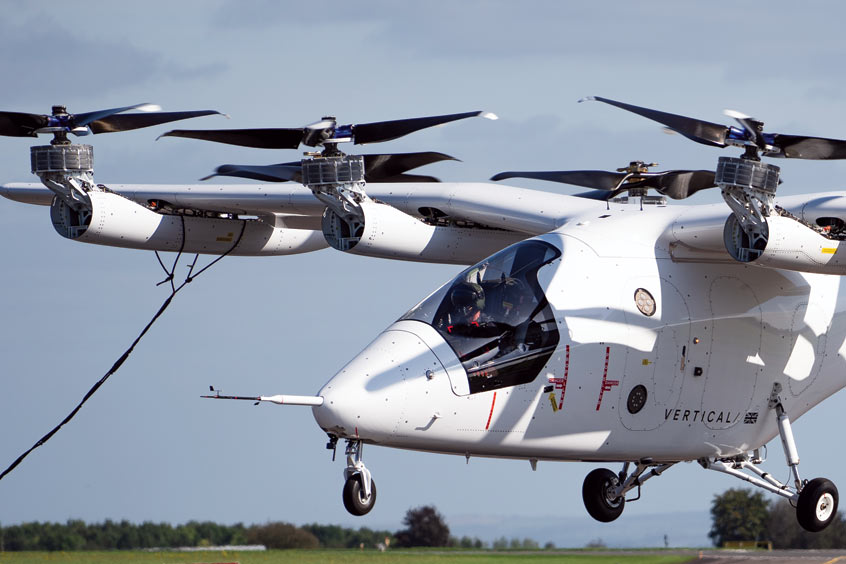
Vertical Aerospace’s latest VX4 has completed the first phase of its piloted flight test programme at the Vertical Flight Test Centre at Cotswold airport in Kemble, UK.
During Phase 1, the prototype conducted multiple piloted tethered flights and ground runs across 20 piloted test sorties, completing a total of 70 individual test points. Together, these tests simulated various aspects of flight and operational situations needed to validate the prototype's safety in real-world flight scenarios, including those outside of its expected operating conditions. By intentionally testing the aircraft's ability to handle failures, Vertical demonstrated the underlying safety of its design.
One of the most important tests successfully carried out included simulating the failure of one electric propulsion unit (EPU), inoperative testing, while in piloted tethered flight to ensure the aircraft responds correctly and continues to be safe while in flight conditions.
These tests have enabled Vertical engineers to collect and measure 35,000 flight and system parameters and verify that all systems are operating correctly and safely in different conditions ahead of further expanding the flight test envelope to piloted thrustborne flight.
Alongside Phase 1 testing, engineers also completed more advanced low and high-speed taxi tests, including deliberately failing EPUs at high taxi speeds to confirm controllability and safety. This verified ground handling characteristics throughout the taxi envelope, as well as aerodynamic characteristics for increasing speed, while in a safe, ground test environment.
Vertical is continuing to work closely with the UK CAA on expanding its Permit to Fly as it prepares for Phase 2 of testing, which will see the VX4 prototype undergo piloted thrustborne flight tests.
Vertical is currently developing an identical full-scale prototype, which will accelerate the VX4's flight test programme and demonstration capability. The company will take flight test learnings from both prototypes into the design and development of the certified VX4 model.
CEO Stuart Simpson says: “It took us just one week to go from our first ground test to our chief test pilot flying the VX4, and we have been making outstanding progress since then. We continue to prove the safety and performance of our design and technology, which we believe to be market leading. Completing this first phase of testing is a significant feat for any eVTOL company and shows the strength of our aircraft, team and our partners as we progress through our flight test programme and head towards our goal of creating a better way to travel.”
Phase 1 of testing included:
- Piloted tethered flight: Performed using closed loop flight control to ensure the aircraft's stability and safety in a controlled environment. Also included simulated failure testing to validate one EPU deliberately failing and assessing automatic aircraft response to bring other engines to maximum power output while in tethered flight.
- Ground vibration testing: Working with specialists from ATA Engineering, who performed testing on the $10 billion James Webb telescope; eight heavy duty shakers were installed on the VX4 while it was suspended in the air to stress test the aircraft in different situations when flying, such as turbulence. 350 accelerometers, devices that measure the aircraft's movements and vibrations during testing, were installed on the inside and outside of the aircraft to collect the data.
- Powertrain testing: Understanding how the powertrain is operating and evaluating all the components that generate and deliver power to the propellors. This includes a high voltage ripple test to measure and analyse voltage fluctuations generated on the powertrain and ensuring the battery can handle it, even at low charge, while providing a stable power supply. This is carried out while the aircraft is tethered in hover.
- Dynamic testing: Ensuring all systems are functioning correctly before they are put into use in flight in real-life conditions such as powering up, checking the parts are installed and connected correctly and that the systems and components work.
- Propellor testing: Propeller balancing and spinning tests to measure weight distribution of each propeller blade to ensure vibrations are minimised for smooth, stable flying.
- Taxi testing: VX4 is piloted at low and high speeds on the ground to test the aircraft can move forwards and backwards effectively, testing brake performance and direction of control using differential thrust.