 The bimonthly news publication for aviation professionals.
 Read this story in our September 2024 printed issue.
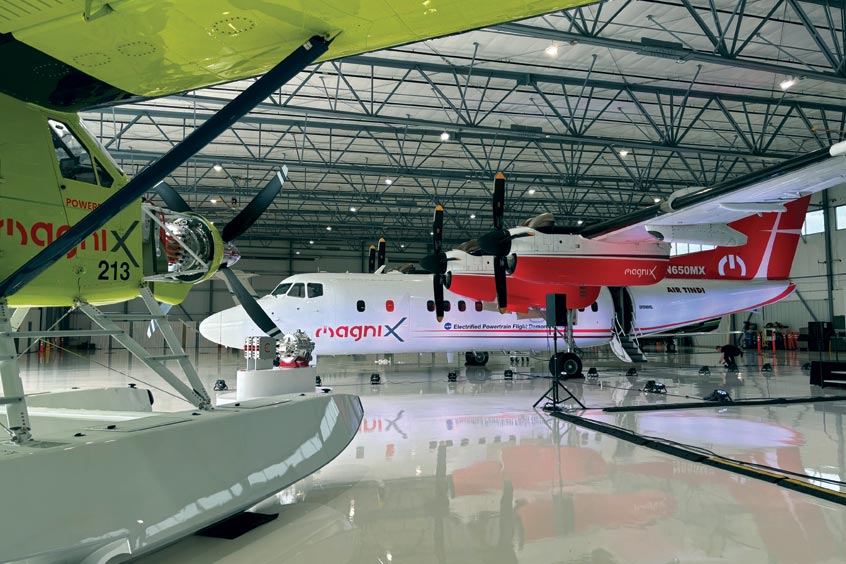
magniX has launched the next phase in the NASA Electrified Powertrain Flight Demonstration Programme (EPFD) as it unveiled the De Havilland DHC-7 (Dash 7) aircraft that will be retrofitted with its electric powertrains.
The aircraft features the logos of magniX, NASA and the provider of the Dash 7, Air Tindi, a commercial turboprop operator from Yellowknife in the Canadian Northwest Territories. Its unveiling is the latest development in the programme that has achieved substantial milestones in 2024:
- February: magniX successfully achieved the Preliminary Design Review (PDR), establishing the design for the retrofit of the Dash 7 with magniX's electric powertrains.
- April: a magni650 electric engine completed the first phase of testing at the NASA Electric Aircraft Testbed (NEAT) facility in Sandusky, Ohio, confirming the magni650's exceptional capabilities at altitudes of up to 27,500ft.
- June: baseline flight tests for the Dash 7 concluded, generating important performance data before it is modified with magniX's technology.
In the next phase of EPFD, one of the aircraft's four turbine engines will be replaced with a magniX electric powertrain, with test flights planned for 2026. The following stage will see a second turbine engine substituted with another magniX powertrain. This configuration is expected to reduce fuel consumption by up to 40 per cent.
“magniX and NASA are demonstrating that sustainable flight can be realised with technology that we have available today,” says Ben Loxton, magniX VP of EPFD and electric storage systems. “The EPFD programme is accelerating its readiness for entry into service, prioritising safety and the highest standards of performance.”
“As EPFD makes outstanding progress, magniX and NASA are proving the feasibility of electric propulsion for commercial flight,” adds CEO Reed Macdonald. “Integrating our game-changing electric powertrains into a regional airliner such as the Dash 7 represents a major step forward in bringing electric solutions into the business of aviation.”
“We at NASA are excited about EPFD's potential to make aviation sustainable and more accessible to more US communities,” says Robert A Pearce, associate administrator for NASA's Aeronautics Research Mission Directorate. “Hybrid electric propulsion on a megawatt scale accelerates US progress toward its goal of net-zero greenhouse gas emissions by 2050, benefitting all who rely on air transportation every day.”