 The bimonthly news publication for aviation professionals.
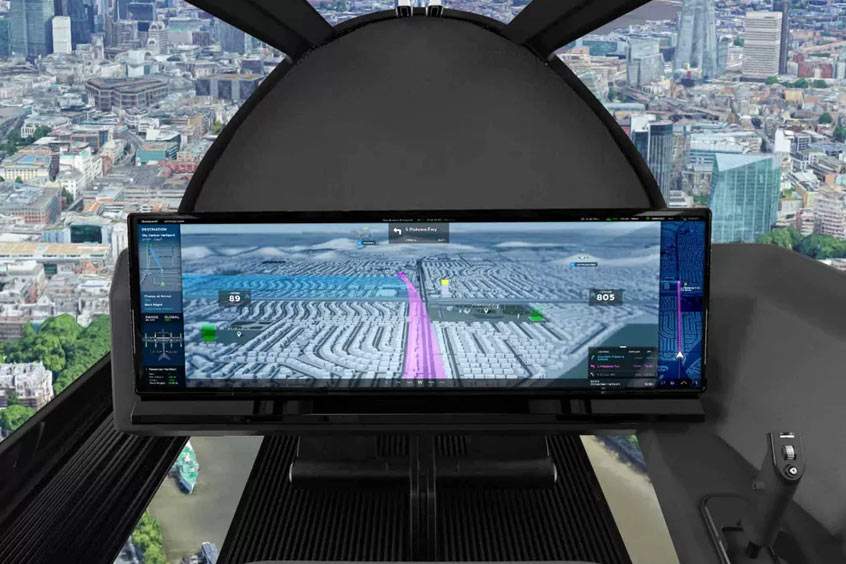
Honeywell has launched DARWIN, a Honeywell-led project under the EU's SESAR 3 Joint Undertaking, to leverage artificial intelligence and advance single-pilot operations in Europe. Research will focus on a human-AI collaboration system, defining clear roles and responsibilities with human pilots remaining the ultimate decision-makers.
Challenges that currently prevent air transport aircraft being manned by a single pilot include the need to keep cockpit workload sufficiently low to allow one person to address even the most demanding situations; the need to replace the second pair of eyes to cross-check actions of the pilot in command; and the need to detect and mitigate a pilot incapacitation. Human-AI teaming can help support pilots in each of the scenarios above.
"A need for higher autonomy requires digital transformation. For both, we need to build trust in AI-based solutions. DARWIN will develop a scalable human-AI collaboration concept that can gradually introduce new functions and pilot assistants, in line with the EASA AI Roadmap," says Jolana Dvorska, senior research and development manager and architect for SESAR.
"This project lays a solid foundation for the future of AI and AI-human collaboration in Honeywell avionics," adds Andrew Barker, vice president of integrated avionics. "We must focus our efforts in these areas to ensure proper baselines are established for the future of minimum crew operations."
Project DARWIN will develop AI-powered digital assistants and a human-AI collaboration framework to support both extended minimum crew operations and single-pilot operations, ensuring the same (or higher) level of safety and same (or lower) workload as operations with a full crew today. The project will deliver solutions that enable operational efficiency, such as pilot state and task monitoring, with the complexity of the future airspace in mind.
The Honeywell-led consortium consists of industry technology providers, aircraft OEMs, leading research institutes, air navigation service providers and key European institutions and regulatory bodies. Project partners include Pipistrel, DLR, Eurocontrol, EASA and Slovenia Control. Work will be led from Honeywell's international development center in Brno, Czech Republic.
The SESAR 3 Joint Undertaking is an institutionalised European partnership between private and public sector partners co-funded by the European Union to accelerate the delivery of the Digital European Sky through research and innovation.