This website uses cookies
More information
The monthly news publication for aviation professionals.
Related information from the Handbook...
The bimonthly news publication for aviation professionals.

Request your printed copy

FAA and KOCA partner on AAM certification and ops
They aim for reciprocal acceptance of airworthiness approvals and environmental testing, as well as approval and monitoring of flight simulators, maintenance facilities, maintenance personnel, flight crew and operations.

The FAA is to partner with the Korea Office of Civil Aviation (KOCA) on future advanced air mobility (AAM) aircraft development and operations. The agencies recently signed a declaration of cooperation under which they will collaborate on AAM projects and share ideas, information, skills and techniques.

“Collaborating with our international partners on safely integrating these new technologies will create more efficient, sustainable and equitable transportation options,” says acting FAA administrator Billy Nolen.

The two agencies will work together to promote the safety oversight of AAM, including airworthiness, licensing and operations.

The announcement follows the FAA's partnerships with Japan and with the UK, Canada, Australia and New Zealand in the National Aviation Authority Network to harmonise its certification criteria and integration plans.


Other News
 
Beta's A250 cleared to carry prospective customers before type certification
November 1, 2026
Beta Technologies has become the first eVTOL developer to receive FAA market survey authorisation, allowing prospective operators to fly the A250 Alia ahead of targeted type certification in late 2027 or early 2028.
Beta and Joby test air taxis under Project Nexus
September 14, 2026
Flights included a round trip between Alliance Fort Worth and Dallas Fort Worth International airport, testing operations between two major airports.
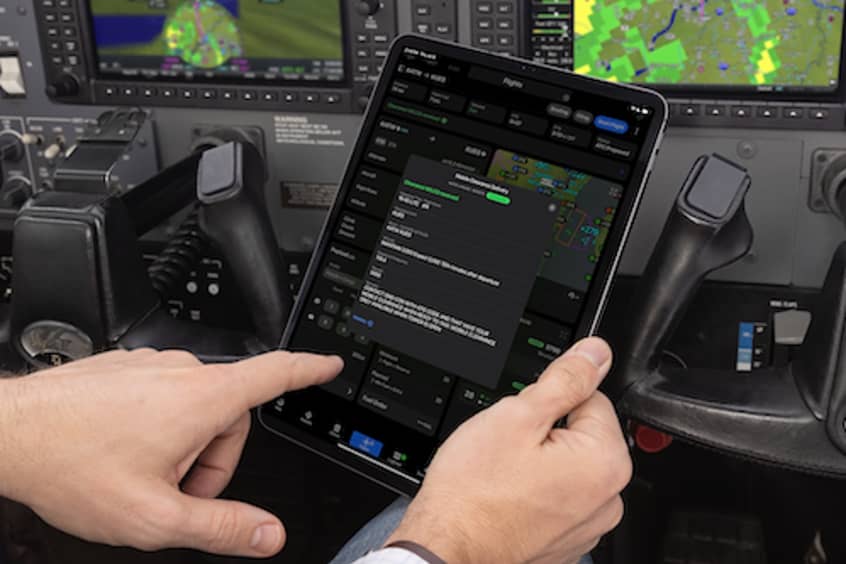
Garmin Pilot streamlines IFR clearances
August 3, 2026
Mobile Clearance Delivery allows Premium subscribers to request and manage IFR clearances digitally. It reduces radio congestion at select US test airports with a nationwide rollout planned through 2028.