



 The bimonthly news publication for aviation professionals.
In support of the aviation industry's transition to 406 MHz Emergency Locator Transmitters (ELTs), safety and survival specialist ACR Electronics has highlighted updates to the Canadian Aviation Regulations mandating the use of digital ELTs onboard aircraft flying in Canada.
The strengthened rules, which require Canadian and foreign-registered aircraft operated in Canada to be equipped with an ELT capable of broadcasting on both frequencies of 406 MHz and 121.5 MHz, were published in the Canada Gazette by Transport Canada on 25 November. With the exception of gliders, balloons, airships, ultra-light aeroplanes and gyroplanes, all commercial air operators, foreign aircraft and private operators have one year to implement the changes while recreational operators have five years to comply.
As a leading global provider of ELTs, ACR Electronics brand Artex is encouraging all aircraft to replace legacy 121.5 MHz ELTs now with the digital 406 MHz version to receive the benefits of both strengthened safety and regulatory compliance.
The 121.5 MHz ELTs are no longer satellite compatible, which means upgrading to a 406 MHz ELT improves passenger safety and enhances efficiency of search and rescue operations, providing a better chance of survival. There are also cost of ownership benefits for those who invest now in an Artex 406 MHz ELT with a five or six year battery life (depending on ELT model), rather than replacing expensive two-year batteries on older, obsoleted 121.5 MHz ELTs.
Heightened industry regulations are accelerating the product progression, with a 2019 FCC rule prohibiting the manufacture, importation or sale of 121.5 MHz ELTs in the US preceding the new Canadian mandate.
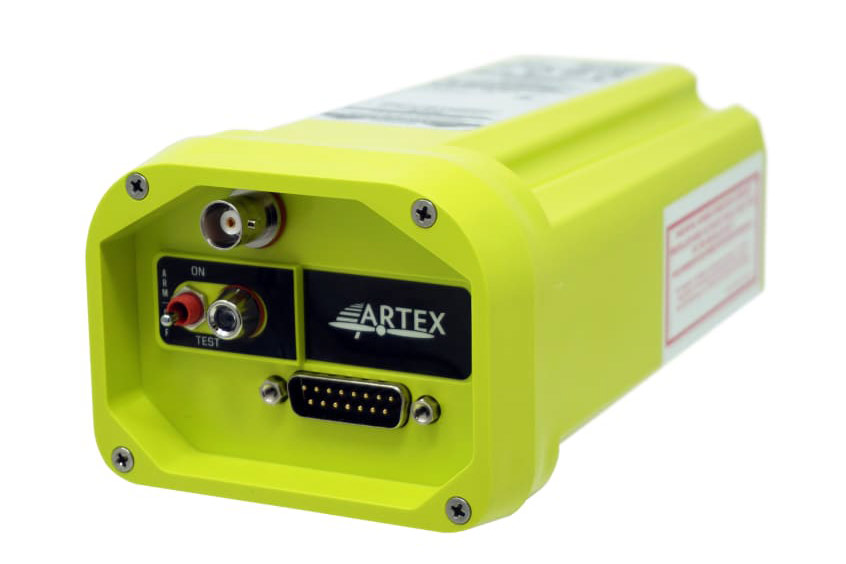
Now FAA approved with multiple antenna and remote switch options, the small form factor and light-weight Artex ELT 345 is the perfect upgrade solution and is the fastest selling ELT on the market, thanks to its competitive price and industry-leading quality standards. The beacon has a 15-inch antenna and a new two-wire slim-line remote switch, enabling three different retrofit configurations featuring flexible options that allow for easier and less expensive installations on experimental and general aviation aircraft.
The Artex ELT 345 transmits on 406 MHz and 121.5 MHz frequencies, providing pilots with an emergency distress beacon that maximises frequency stability and power while incorporating a built-in GPS navigational interface. Utilising the three Cospas-Sarsat satellite systems, the GEOSAR, LEOSAR and the new MEOSAR constellations, the Artex beacon provides search and rescue forces around the world with the user's ELT emergency distress message and location in less than three minutes.