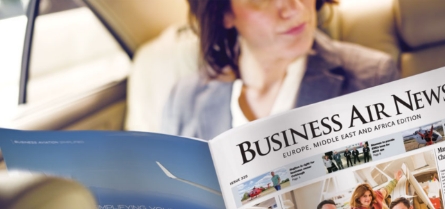



 The bimonthly news publication for aviation professionals.
Athens-based Air Business International (ABI) has joined forces with Starlite Helicopter Corporation of South Africa to create Starlite Aviation Greece. The company has suffered recently because of heavy movement restrictions, which were in effect throughout the Olympic Games.
The company, which is based at Athens International Airport, is mostly owned by its South African mother company, while ABI holds a 10 per cent stake and manages its services.
Starlite operates a Bell 407, an SA-330J Puma and a Bolkow Bo-105. Its services include charter flights, long term contracts, aircraft sales, maintenance and the supply and distribution of support equipment.
ABI previously owned and operated Hellas Air, which was sold to a South African entity a year and a half ago. According to ABI’s general director, Doulis Karafil, Hellas lost its AOC earlier this year because it had no activity or personnel.
The consultancy and brokerage firm then went on to organise Starlite in South Africa for helicopter transportation for the public sector. Its latest project, Starlite Aviation Greece, has been hindered by contract delays as well as the Olympic Games.
“Starlite Aviation Greece was formed at the beginning of the year, when we obtained our AOC,” said Karafil. The company had planned to operate flights for the fire department in Greece but the contract has yet to be offered to them.
“During the Olympics, the flight of helicopters was heavily restricted. Five Olympic cities had no-fly zones of about 45 nautical miles. Certain flights, with great difficulty and a lot of bureaucracy, could take place – but those were mainly between airports.”
The effect of the Olympics has been witnessed by operators across Greece but for fledgling companies, the lack of business causes particular concern. “The market is practically dead, especially for the helicopter business,” said Karafil. “Even the [airborne] TV coverage is done by an English company. The Olympics have been catastrophic for aviation.
“The unfortunate thing is that we not only suffer during the games, but also 15 days before and afterwards for the paralympics. Everybody has been affected by the security measures – to be paranoid is one thing and to be safe is another,” he added.
The company hopes that the publicity generated by the event will bring business to Greece in the longer term and that the market will recover.
“Let’s hope that Greece will survive the post-Olympic shock.”