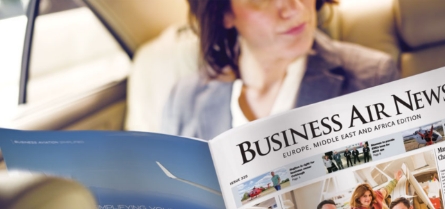



 The bimonthly news publication for aviation professionals.
From one side of Europe to the other, business aviation has had a great many economic challenges facing it this year.
A hot topic of debate across the continent – the Euro – is taking some time to settle down in the countries in which it has been adopted; an increasing amount of regulations means operators are always having to spend to comply; and economic slowdown in the US has long been threatening to spill over into European waters.
In spite of this, EBAN’s regional reviews of charter companies in Europe have shown that while some have coped better than others, in general the industry is still growing in both its financial worth and also people’s perception of it.
In Turkey, an economic crisis hit the country in March, forcing many companies to return their aircraft to the US on the back of sudden bankruptcy. Just recently, the economy has begun to recover with more aircraft orders being made.
In Sweden, the country has only recently got itself back on its feet, following a dreary decade when inflation and unemployment were both high. A number of economic policy reforms have helped resurrect the Swedish economy, as reflected by a more positive GA industry.
In Spain, operators are keen to see how strong the Euro becomes after the final phase of its introduction in 2002. At present, the market is steadily growing but could easily wobble should the Euro take a dive.
In France and Switzerland, the heavyweights are surging forward with multiple aircraft orders and even the smaller operators seem to be confident that they will also flourish in the buoyant market.
In Germany, GA operators continue to be more prevalent than in any other European countries but it is interesting to note that some operators are looking to form an alliance – not dissimilar to the Star Alliance model of the airlines industry – in order to strengthen their market positions.
And in the UK, the business aviation message of efficiency and economics continues to spread further, with the general opinion that more and more executives want to travel further afield and carry more people. Fractional ownership, it seems, has also increased the activity of some operators with fractionals unable to personally provide the aircraft time they sell.
As Europe’s economy becomes more closely linked with that of the rest of the world, it is even more important that it can stand on its own two feet. At least European business aviation is showing it has the backbone to resist the challenges of now, and those yet to come.
On a lighter note, if that all seems a bit heavy, this year’s reviews have also thrown up the funnier and more unusual moments which the industry so rarely reveals. In France, Air Bor helped out a French minister who had overslept and missed her train; EastAir’s Janne Oesterwall told us that business aviation in Sweden could only grow because there was no way it could get any slower; Helit Helicopters in Switzerland recalled a charter flight where flowers were delivered by a whimsical girlfriend to her Italian lover by dropping them to him from the aircraft; and TAG Aviation and Occitania combined to bring home to prison one of Britain’s most notorious criminals, Ronnie Biggs.
Richard Evans, Editor, richard.evans@stanstednews.com