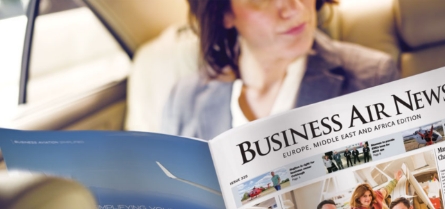
 The bimonthly news publication for aviation professionals.
On the 7th July 1999, the JAA Operations Committee's Aerial Work and General Aviation Sub-Committee met for the first time in Paris to launch work on JAR-OPS 2, the new JAA requirements which will cover corporate operations, aerial work and other aspects of general aviation outside commercial air transport. The Sub-Committee met jointly with the Helicopter Sub-Committee, which will start work on JAR-OPS 4, the equivalent requirements for helicopters.\rThis meeting heralded a new era for Europe's business aviation. Those of us in the business aviation community have been waiting a long time for the formal launch of JAR-OPS 2 and, surprisingly, we can now look forward to work commencing ahead of the implementation of JAR-OPS 1 for those small aircraft which represent the commercial air transport element of business aviation.\rEurope's corporate operators will now be wondering what JAR-OPS 2 will bring for them. Will it be a repeat or watered-down version of JAR-OPS 1 and all that it entails? Will it add to the depth (and here in the UK, cost) of regulation? How will the differing existing regulations in the JAA States be reconciled and will there be any harmonisation with existing FAA rules? Above all, will it affect that great benefit of corporate operations, flexibility? This is a great opportunity for the Joint Aviation Authorities (JAA) and industry to get it right, particularly if Europe is to retain and continue to attract business aircraft to European registers. Business aviation, including corporate aviation has an enviable safety record. So will there be a need to fix what isn't broke?\rFrom a commercial standpoint, business aviation in Europe is already facing an era of change. Air Taxi operators continue to move up-market using more and more sophisticated aircraft. Fractional ownership is here (although unlike the US, it operates to commercial air transport rules). More and more companies are taking on aircraft management commitments and using those aircraft to back up their own charter demand and even the needs of the fractional ownership fleet owners! Business aircraft sales soar to record high levels. We must, therefore, ensure that the JAA requirements in JAR-OPS 2 keep Europe's business aviation (and indeed aerial work operations) in the air.\rI know that many representative organisations, including ours, have debated how we will present ourselves to the JAA and our own National Aviation Authorities with regard to JAR-OPS 2. We have all looked at codes of practice or conduct as a means to satisfy the authorities of our continuing commitment to safety without the introduction of over-burdensome regulation. This has to be the way forward. \rWhether such codes are formulated by industry itself or by the authorities has yet to be argued but it is a golden opportunity for all of us in Europe to work together to keep business aviation flying. I've spoken to a number of flight department managers about their aspirations for JAR-OPS 2. There are, of course, many differing opinions. However, there are one or two themes which have surfaced. Will pilots be able to continue employing performance criteria based on manufacturers' limits? Will a European Commission Flight Time Limitation Scheme apply or will the EC Working Time Directive apply or will captains have discretion? There are many other important concerns.\rBusiness aviation is different from other air transportation and it is very special. Airlines seek to minimise the down-time of aircraft - business aviation seeks to minimise the down-time of those it carries! So if we are going to retain the flexibility of operation to achieve that principle, then we have got to persuade the JAA get JAR-OPS 2 right.\rWe at GAMTA are ready to work with every other organisation in Europe to make a contribution to the debate. Now is the time to make that contribution - at the formulation stage. And if we get it right, then we can all look forward to an exciting new era for Europe's business aviation operators.\r - Graham Forbes is the chief executive of General Aviation Manufacturers & Traders Association (GAMTA), the national trade body representing the UK's general aviation sector.