See more information from the Business Air News Handbook
Press Release
Issued by Life Flight Network.
September 18, 2024
Life Flight Network, the USA's largest not-for-profit air medical transport service, plans to relocate its fixed-wing aircraft from Port Angeles to Renton, Washington, by early 2025. The move is intended to increase availability for the communities they serve, enhance patient care and optimise operational efficiencies. Importantly, Life Flight Network's Port Angeles base will continue to provide exceptional emergency medical care and transport via its helicopter, ensuring uninterrupted service to Port Angeles and the surrounding areas.
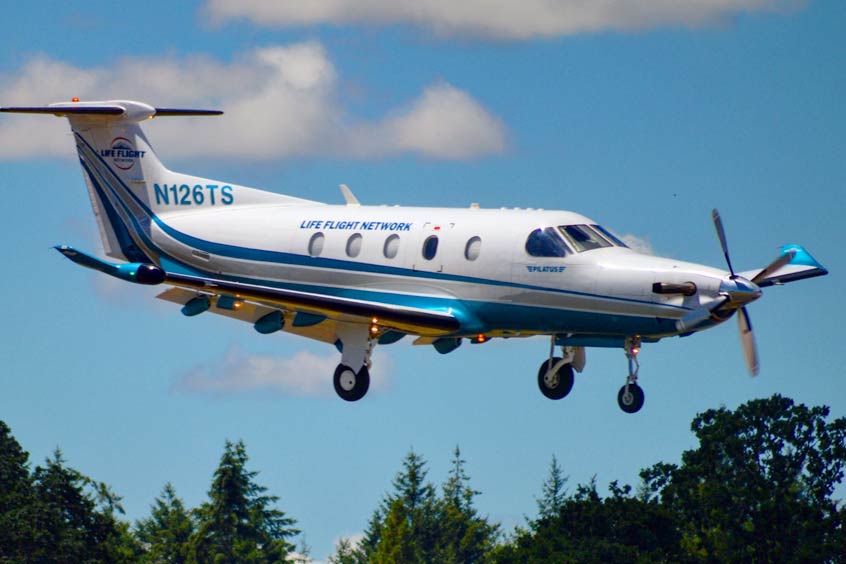
The Pilatus PC-12 and associated staff, stationed at the William R. Fairchild International Airport since October 2019, will move across the Puget Sound to an existing hangar at the Renton Municipal Airport. New offices are being constructed to accommodate both relocating pilots and aircraft mechanics, and the clinicians who will be hired for the new location.
The decision to relocate this asset comes after much consideration over how the organisation can best serve and support its communities. With less than 10% of the Port Angeles base's fixed-wing transport originating from the Olympic Peninsula and most patients going to Seattle area hospitals, stationing the aircraft in Renton will decrease response times and time to definitive care for those in need.
"Life Flight Network's top priority is providing the highest quality care to the patients we exist to serve," said Michael Weimer, chief operating officer for Life Flight Network. "Relocating our fixed-wing plane from Port Angeles to Renton allows us to streamline our operations, reducing response times and enhancing our ability to reach more people in need of critical care. This move strengthens our commitment to delivering timely, lifesaving services across the region, ensuring that our communities continue to receive critical emergency medical care when they need it most."