


Press Release
Issued by ..
June 29, 2018
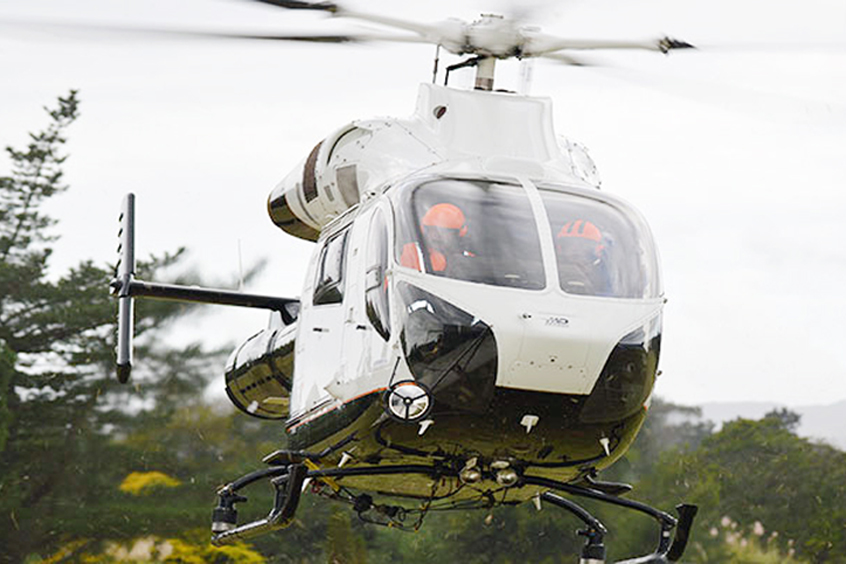
Airborne Systems, the manufacturing division of Oceania Aviation, has completed another significant modification project, this time for the MD Helicopters 900 Explorer. The Pilot Seat Relocation Kit (PSRK) allows the pilot's seat to be moved 6cm to the right, increasing pilot visibility for utility work such as sling-loading or long lining without removing the pilot's door.
The demand for this mod to improve visibility initially came from a client based in Hong Kong. With the increased costs of offshore development and testing as well as dealing with unfamiliar regulators, the decision was made to have the design work completed by a CASA Part 21 organisation with product development and testing to be completed in New Zealand. As NZCAA STCs are accepted in Australia and with the Australia-Hong Kong bilateral agreement in place, this provided the most logical solution for the end user.
After the concept and design was finalised, a prototype kit was manufactured, with installation and testing conducted in Napier on the RotorForce MD900 with CEO, Joe Faram behind the collective.
Joe Faram said, "I am happy to comment that the pilot's position in relation to flight controls remains natural with no interference or inability to operate as if the seat was in its original position. Of importance though, it did greatly enhance the pilot's ability to see the RH Skid when landing with the pilot's door installed. Otherwise, not achievable from the manufacturer's position. Removing the door enables the pilot to easily transition his head and shoulders out the door for external load reference, while still able to operate the flight controls with no readjustments. The transition is natural and easy. When flying at night with the pilot's senses elsewhere focussed, again the piloting position was natural and enabled the pilot to concentrate on night flying skills without an additional workload of readjusting his senses and thoughts to that of an impaired seating position."
This is another great example of how our Airborne Systems team produce creative solutions to improve operational performance and safety.