



Press Release
Issued by Green Charter 2022.
December 7, 2020
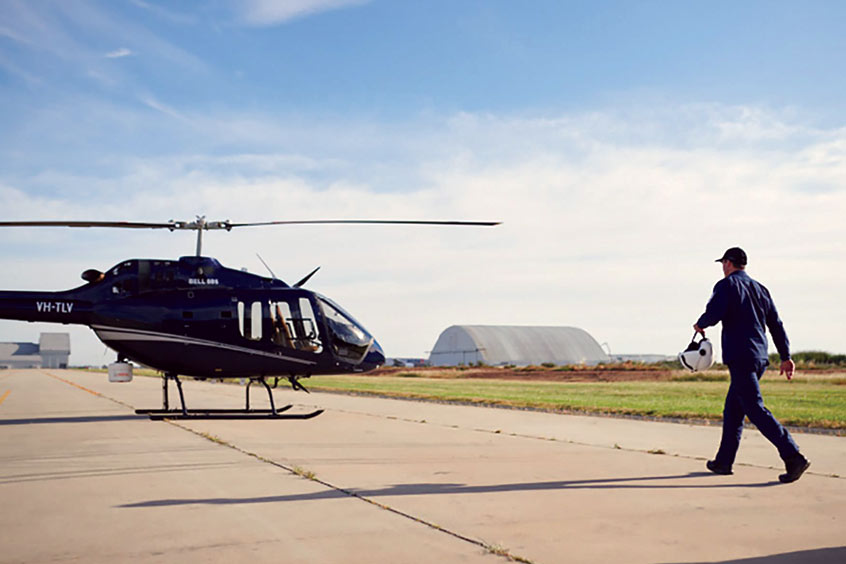
Two new helicopters conducting vegetation and powerline inspections for Australian electricity distributor Powercor will be seen flying above Warrnambool in Victoris this week as part of their first official flight. The helicopters, combined with industry-leading technology, will establish a unique aerial services capability to support Powercor's annual vegetation management programme.
From Tuesday, 8 December until Monday, 21 December, the Bell 505 helicopters will be flying across Warrnambool and surrounding areas using advanced Light Detection and Ranging (LiDAR) technology to scan for vegetation growing too close to powerlines. Headed up by a team of highly-qualified pilots, the flights over Warrnambool this month mark the start of the annual inspection programme in the south west area. From January, the helicopters will be conducting flights in Colac, Camperdown, Portland and the surrounding regions.
Powercor head of vegetation management, Hugh Vickers-Willis said bringing Powercor's air inspections in house, rather than using external contractors, will deliver significant improvements including better efficiency, flexibility, safety and data quality. “By improving our aerial services capability and technology we can further reduce the risk of bushfires and improve network reliability,” Mr Vickers-Willis said. “The helicopters allow us to have more control over when and where we inspect our networks. For example, we can conduct additional inspections throughout the year, including ahead of the bushfire season in our highest risk areas, or respond quickly if conditions change in a particular part of the network.”
The helicopters will fly above powerlines at just over 300 metres at a speed of about 130kmh. They have been fitted with a Riegl sensor system, which uses LiDAR scanning technology to accurately measure the distance between any tree branches or other vegetation and the electricity network.
The data creates a 3D image of the entire network and this is analysed by an internal team of highly-qualified data analysts to help inform Powercor's annual tree-cutting schedule. Each time the network is inspected, more is learned about the different environmental conditions and vegetation growing rates across the region.
“This data helps ensure we identify precisely which trees to cut, by how much and when,” Mr Vickers-Willis said.
Powercor has inspected 100% of the network in high and low risk bushfire areas in 2020 and cleared vegetation from more than 72,000 powerline spans (the distance between two power poles). Vegetation management is part of Powercor's broader bushfire mitigation programme, which also includes an extensive asset inspection and maintenance programme and the installation of new safety technology on the network.
Vegetation growing too close to powerlines can also cause power outages. Powercor is responsible for the cutting and removal of trees near its 86,000 km of powerlines within the boundaries of private properties and on public land in order to maintain the required safe clearance space.
The helicopters are operated by the network's affiliate business, Beon Aerial Services.