



Press Release
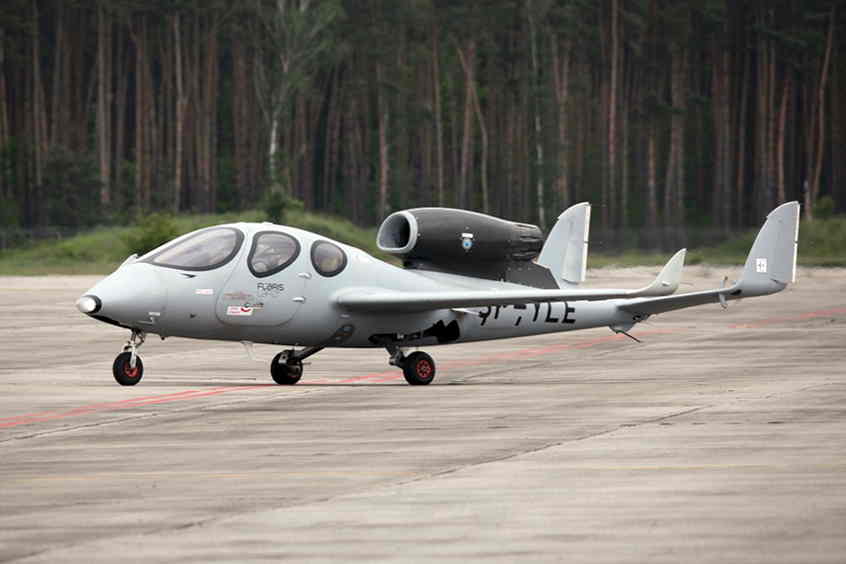
Issued by Flaris Sp. z.o.o..
December 20, 2019
Flaris Sp. z.o.o. is pleased to announce that 2019 was a successful year the company. The Flaris LAR1 completed ground tests and extended flight tests. It performed 55 flights, including three two-hour-long flights. These tests checked the airframe's performance, the propulsion system including the FJ33-5A engine and onboard systems.
The aircraft is characterised by an exceptionally low, safe minimum velocity of only 59kt (109km/h). This velocity is comparable to light, easy-to-fly, trainer planes. This guarantees a high level of safety when landing on unpaved grass strips. The Flaris LAR1 is characterised by a dynamic, exceptionally short takeoff run of 250m over 10 seconds. In contrast, the take-off runs of modern VLJ and LJ business aircraft are approximately 1,000m.
The Flaris is also safe during take-off because it protects the pilot against stalling (it even prevents stalling). A high, safe climb speed of over 30 m/s guarantees safe passage through bad weather conditions, such as ice and strong gusts of wind. The results of calculations and ground resonance tests confirm that the Flaris LAR1 can reach a velocity of up to KCAS 220 kt during factory tests,which is equivalent to TAS of over 600km/h at the cruising altitude of 7,600m.
At the end of January 2020 the OEM will commence the factory test programme, which it plans to complete by the end of the third quarter of 2020.
In March 2020, another unit, no. 005, will begin ground tests. 005 was upgraded with a new generation of autopilot which was manufactured by the American company Genesys Aerosystems. In combination with Flaris' proprietary OPV technology and its FFAS onboard computer, it guarantees a new level of flight safety among general aviation aircraft. The FFAS supports and automates the procedures of plane testing, starting, flight and landing at any aviation club airport.
Flaris developed the FFAS automatic take-off and landing system in 2017 as part of the Flaris MALE programme, thanks to the support of NCRD (INNOSBZ). It has been testing the FFAS system since then.
In spring 2020, the manufacturer will showcase an aircraft equipped with these innovative solutions.

