Press Release
Issued by Cosmic Aerospace, Inc..
July 29, 2026
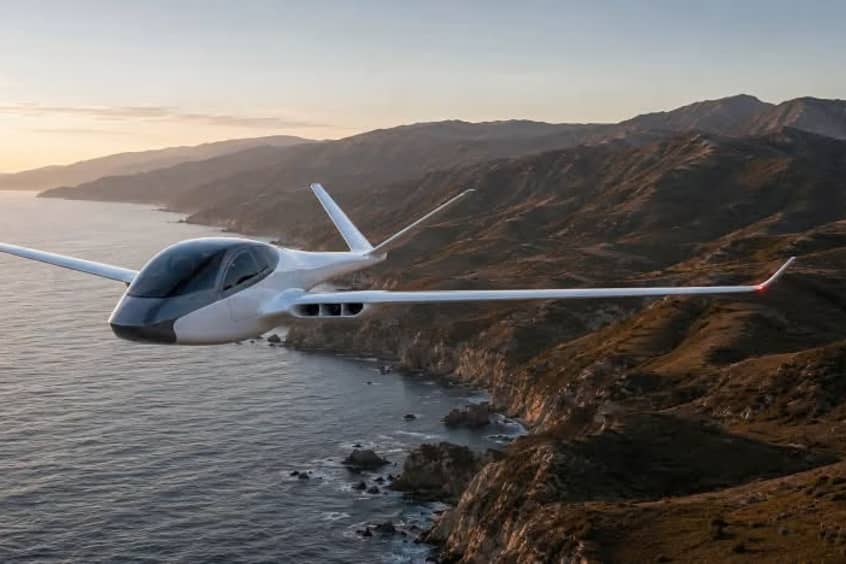
Cosmic Aerospace today unveiled Cosmic One, a premium four-seat all-electric aircraft designed specifically to be certified under the FAA's new MOSAIC rules and named Centennial Flyers, one of the largest flight clubs in the country, as its first U.S. launch customer. Reservations are now open.
The reveal comes just days after new FAA rules known as MOSAIC took effect on July 24, 2026, the biggest update to small aircraft certification in more than 20 years. MOSAIC moves to performance-based standards, allows up to four seats and for the first time clears the way for electric aircraft to be factory-built and certified. It is designed to strengthen safety while opening the door to modern technology like electric propulsion.
That change resets the economics and the timeline of building an airplane. Certifying a new aircraft with a new propulsion system under Part 23 can take close to a decade and hundreds of millions of dollars. Under MOSAIC, Cosmic aims to certify Cosmic One and deliver its first units within three years.
"Until now, certification has been the biggest barrier to bringing advanced electric aircraft to market. The physics for electric aviation has worked for years. What held it back was certification economics. MOSAIC changes that, and we designed Cosmic One specifically for this pathway," says Christopher Chahine, cofounder and CEO of Cosmic Aerospace
Cosmic One is the first aircraft to incorporate the company's proprietary embedded wing architecture, which unites the airframe and propulsion systems to enable multi-engine redundancy for safety, high-speed flight, the climb rate of a jet and exceptional efficiency. The aircraft is designed for excellent visibility, low noise and dramatically lower maintenance and operating costs than modern piston aircraft.
The company has flown two subscale demonstrators and has its second-generation electric engine in high-power ground testing with a proprietary cooling system covered by two patent filings. Cosmic One is aimed at the private owner operator, flight school and flight club markets.
Centennial Flyers operates 42 aircraft and has more than 1,000 members, making it one of the largest flight clubs in the country.
"Every day, we see firsthand what legacy aircraft cost in fuel, maintenance and downtime. It's even worse for multi-engine aircraft, where even new ones on the production line are running with 75 year-old engine technology. That's why we're proud to be the launch customer for the Cosmic One, an all-electric multi-engine aircraft designed for lower operating costs, built-in redundancy and exceptional performance in the high density altitudes we deal with here in Colorado," comments Scott Smith, president at Centennial Flyers.
Cosmic is also building a growing network of airport partners, currently counting 18 partner airports across the United States and Europe. Among them is Centennial Airport in Denver, Colorado, one of the busiest general aviation airports in the world, handling nearly 1,000 aircraft operations each day and hosting approximately 850 based aircraft.
"At Centennial Airport, we're working alongside Cosmic Aerospace, our FBOs, flight schools and operators to define the charging infrastructure, power requirements, operating procedures and ground operations needed to support electric aviation. Electrification and sustainability are operational priorities for our airport because aircraft noise and emissions directly affect our surrounding communities," states Mike Fronapfel, CEO of Centennial Airport.
Cosmic Aerospace is a Denver-based electric aircraft company founded in 2022, with a presence in Sint-Truiden, Belgium. Besides the Cosmic One, the company is also developing the Skylark, a regional electric aircraft for the sub-50-seat market.